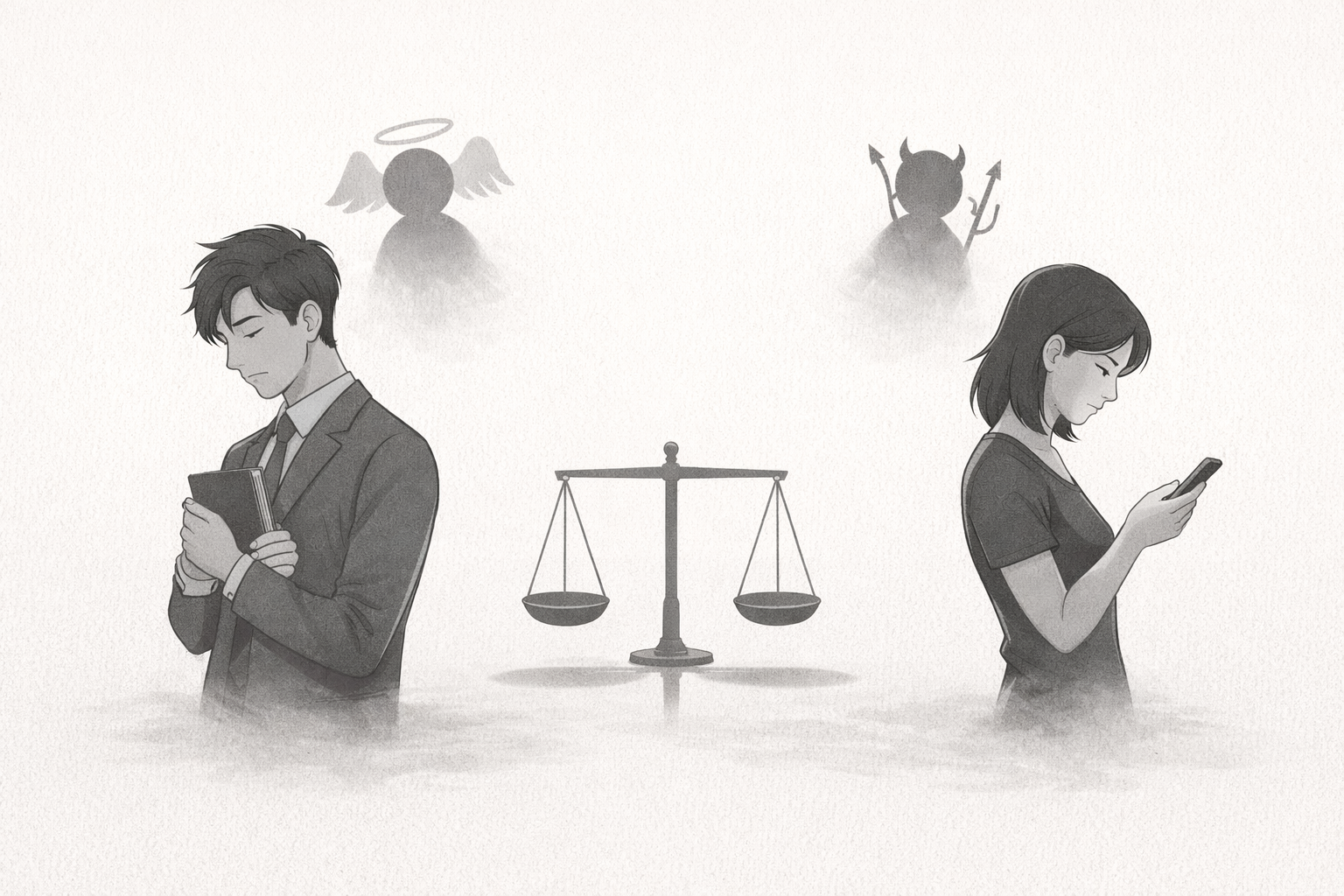
Ethics is not a theory. It is the practice of choosing correctly when there is no reward for doing so and no punishment for failing.
Most moral failures do not occur in moments of crisis. They happen in ordinary situations—small compromises, silent approvals, convenient excuses. Character is shaped not by dramatic decisions, but by repeated, unnoticed choices.
Ethics is revealed most clearly when no reward is promised and no punishment is expected.
Modern life encourages speed over reflection. Efficiency over judgment. Comfort over conscience. Decisions are made quickly, justified easily, and forgotten immediately.
Systems now absorb much of what was once personal responsibility. Tasks are automated. Procedures replace deliberation. Accountability is distributed until it disappears.
When effort is removed, awareness declines. People follow instructions without examining consequences. Harm becomes indirect, and therefore easier to ignore.
Ethical living requires attention. It requires the willingness to pause, to question, and to accept personal responsibility for outcomes, even when responsibility is inconvenient.
Morality does not originate in law, reputation, or reward. It develops through discipline, empathy, and sustained self-examination. Without these, rules become substitutes for conscience.
When responsibility is divided and automated,
accountability gradually disappears
In professional life, ethical conduct creates trust. In private life, it creates stability. In public life, it sustains institutions. When it weakens, systems deteriorate quietly and persistently.
Responsibility is often described as a burden. In reality, it is a form of independence. It allows individuals to act without dependence on surveillance or approval..
A balanced life resists shortcuts. It accepts delay. It tolerates difficulty. Thoughtful action preserves dignity precisely because it is not easy.
Ethics is not perfection. It is continuous effort—the repeated decision to choose honesty, fairness, and restraint in situations where compromise would be simpler.
It is practiced daily.
Usually unseen.
Always consequential.